
The term “aspertaan” appears to be a common misspelling or variation of aspartame, one of the most widely used artificial sweeteners in the world. Aspartame is found in thousands of “sugar-free,” “diet,” and “low-calorie” food and beverage products. It has been the subject of scientific research, regulatory reviews, and public debate for decades.
In this article, we will explore what aspartame (aspertaan) is, how it works, where it is used, its benefits, potential health concerns, and what science currently says about its safety.
What is Aspertaan (Aspartame)?
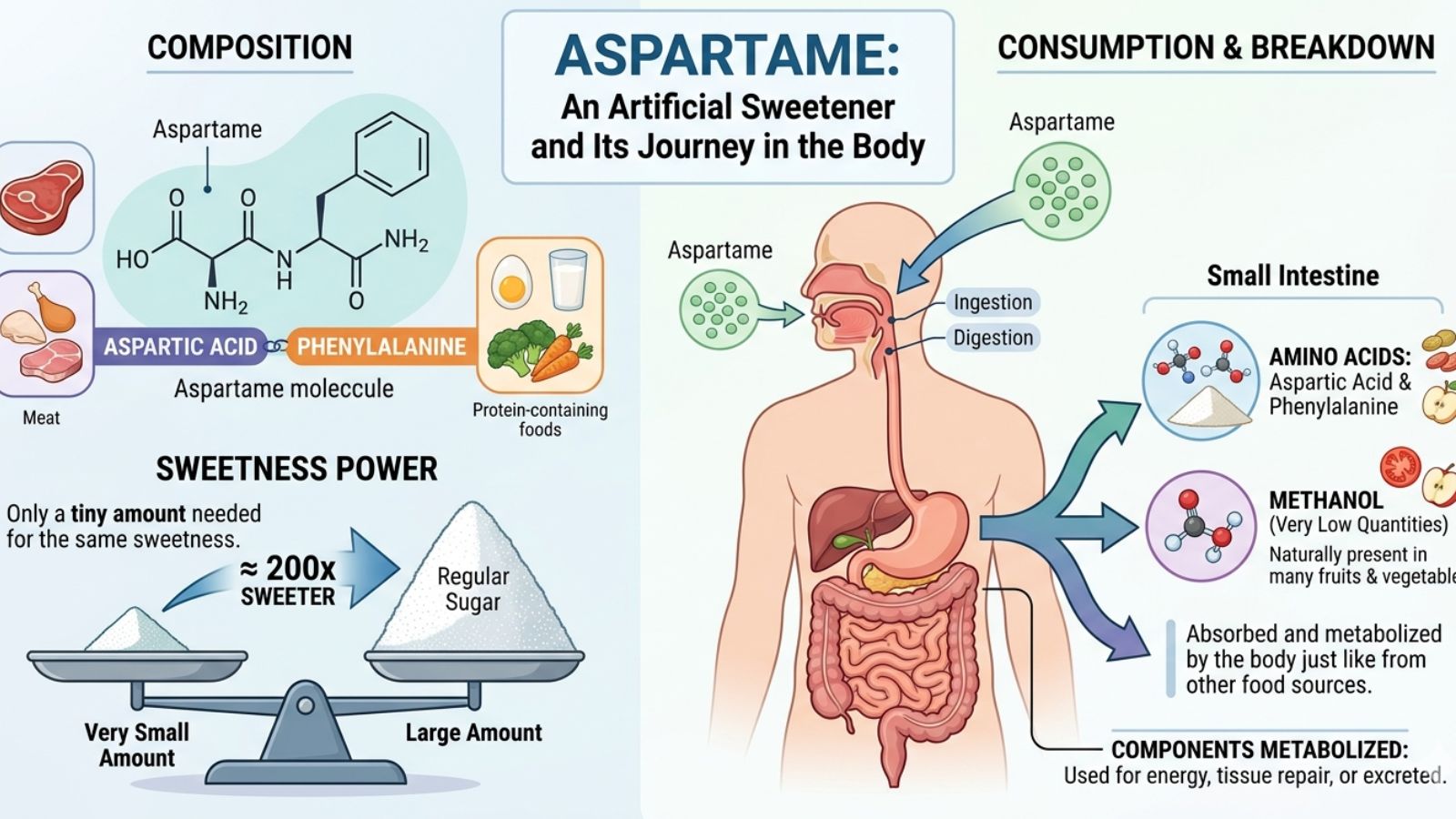
Aspartame is an artificial sweetener used as a sugar substitute. It is approximately 200 times sweeter than regular sugar, meaning only a very small amount is needed to achieve the same level of sweetness.
Chemically, aspartame is made from two amino acids:
- Aspartic acid
- Phenylalanine
These are naturally occurring compounds found in many protein-containing foods like meat, dairy, and vegetables.
When consumed, aspartame breaks down in the body into:
- Amino acids (aspartic acid and phenylalanine)
- A small amount of methanol (in very low quantities)
These components are also naturally present in many everyday foods.
How Does Aspartame Work?
Aspartame works by stimulating the taste receptors on the tongue that detect sweetness. However, unlike sugar:
- It provides almost no calories
- It does not significantly raise blood sugar levels
- It is used in extremely small amounts due to its high sweetness intensity
Because of these properties, it is commonly used in diet foods and beverages.
Common Products Containing Aspartame
Aspartame is widely used in the food industry. You can find it in:
1. Diet Soft Drinks
Many sugar-free sodas use aspartame to maintain sweetness without calories.
2. Sugar-Free Chewing Gum
It helps maintain sweetness for longer periods compared to sugar.
3. Low-Calorie Desserts
Products like puddings, yogurts, and gelatin desserts often include it.
4. Tabletop Sweeteners
Packets of artificial sweeteners for tea and coffee frequently contain aspartame.
5. Medications
Some syrups, chewable tablets, and vitamins use aspartame to improve taste.
Why is Aspartame Used?
Food manufacturers use aspartame for several reasons:
1. Weight Management
Since it contains almost no calories, it is often used in weight-loss or diet products.
2. Blood Sugar Control
It does not significantly affect blood glucose levels, making it popular among people managing diabetes.
3. Cost Efficiency
It is sweeter than sugar, so smaller quantities are needed, making it cost-effective.
4. Taste Improvement
It allows manufacturers to offer sweet-tasting products without the calories of sugar.
Safety of Aspartame: What Science Says
Aspartame has been one of the most researched food additives in history. Multiple international health organizations have evaluated its safety, including:
- World Health Organization (WHO)
- U.S. Food and Drug Administration (FDA)
- European Food Safety Authority (EFSA)
Acceptable Daily Intake (ADI)
Regulatory bodies have established an Acceptable Daily Intake (ADI) for aspartame:
- Approximately 40–50 mg per kg of body weight per day (varies by region)
To exceed this limit, a person would need to consume an extremely large amount of diet soda or aspartame-containing products daily.
General Scientific Consensus
Most major health authorities agree that aspartame is safe for the general population when consumed within recommended limits.
Health Concerns and Controversies
Despite regulatory approval, aspartame has been controversial for decades. Concerns include:
1. Headaches and Sensitivity
Some individuals report headaches, dizziness, or sensitivity after consuming aspartame. However, scientific studies have not consistently confirmed a direct link for the general population.
2. Cancer Concerns
Aspartame has been studied for possible links to cancer. While some early studies raised questions, extensive reviews by regulatory agencies have not confirmed a clear causal relationship at normal consumption levels.
3. Phenylketonuria (PKU)
People with a rare genetic disorder called phenylketonuria (PKU) cannot properly metabolize phenylalanine. For them, aspartame can be dangerous and must be strictly avoided. Products containing aspartame carry warning labels for this reason.
4. Gut and Metabolism Effects
Some emerging research explores whether artificial sweeteners may affect gut bacteria or appetite regulation. Findings are still inconclusive and require more study.
Aspartame vs Sugar
A common comparison is between aspartame and regular sugar.
| Feature | Sugar | Aspartame |
|---|---|---|
| Calories | High | Very low |
| Sweetness | Standard | ~200x sweeter |
| Blood sugar impact | Increases | Minimal impact |
| Dental health | Causes cavities | Does not cause cavities |
| Stability in heat | Stable | Less stable at high heat |
Because of these differences, aspartame is often used in products designed for calorie reduction.
Is Aspartame Safe for Daily Use?
For most people, moderate consumption of aspartame is considered safe. However, like any food additive, it should be consumed within recommended limits.
It is generally advised to:
- Avoid excessive intake of diet sodas or artificially sweetened products
- Maintain a balanced diet with natural foods
- Be cautious if you have known sensitivities
People with PKU must strictly avoid it.
Natural Alternatives to Aspartame
Some people prefer natural sweeteners over artificial ones. Alternatives include:
- Stevia (plant-based sweetener)
- Honey (natural sugar, but high in calories)
- Erythritol (sugar alcohol with low calories)
- Monk fruit extract
Each alternative has its own benefits and limitations depending on dietary needs.
Future of Artificial Sweeteners
The demand for low-calorie sweeteners continues to grow as people become more health-conscious. Research is ongoing to develop:
- Better-tasting sugar substitutes
- Safer metabolic profiles
- More natural formulations
Aspartame remains widely used, but the industry is evolving with new alternatives entering the market.
Conclusion
“Aspertaan,” commonly referring to aspartame, is a widely used artificial sweetener that plays an important role in modern food and beverage production. It offers sweetness without significant calories and is especially popular in diet and sugar-free products.
While it has faced ongoing debate and controversy, major health authorities continue to consider it safe for most people when consumed within recommended limits. Like many food ingredients, moderation is key, and individuals with specific health conditions (such as PKU) must avoid it completely.
Understanding aspartame helps consumers make informed choices about what they eat and drink, especially in a world where sugar alternatives are becoming increasingly common.
FAQs about Aspertaan (Aspartame)
1. Is aspertaan the same as aspartame?
Yes, “aspertaan” is most likely a misspelling or variation of aspartame, an artificial sweetener used in many sugar-free products.
2. Is aspartame harmful to health?
For most people, aspartame is considered safe when consumed within recommended limits. However, individuals with phenylketonuria (PKU) must avoid it completely.
3. Does aspartame cause weight gain?
Aspartame itself is very low in calories and does not directly cause weight gain. However, overall diet habits and excessive consumption of sweet foods (even sugar-free ones) may still affect weight management.
4. Why is aspartame controversial?
Aspartame has been debated due to concerns about headaches, cancer risk, and other health effects. However, major scientific reviews have not confirmed significant risks at normal intake levels.
5. What foods commonly contain aspartame?
Aspartame is found in diet sodas, sugar-free gum, low-calorie desserts, tabletop sweeteners, and some medications.

Theo Louse
I am Theo Louse. My skills are dedicated to the field of technology information and try to make daily lives more enjoyable. With more than 12 years of experience with BM, we are particularly famous for 100% self-developed ideas. Over these years, we have worked to make everyday life more convenient for the fast-paced world we live in.