
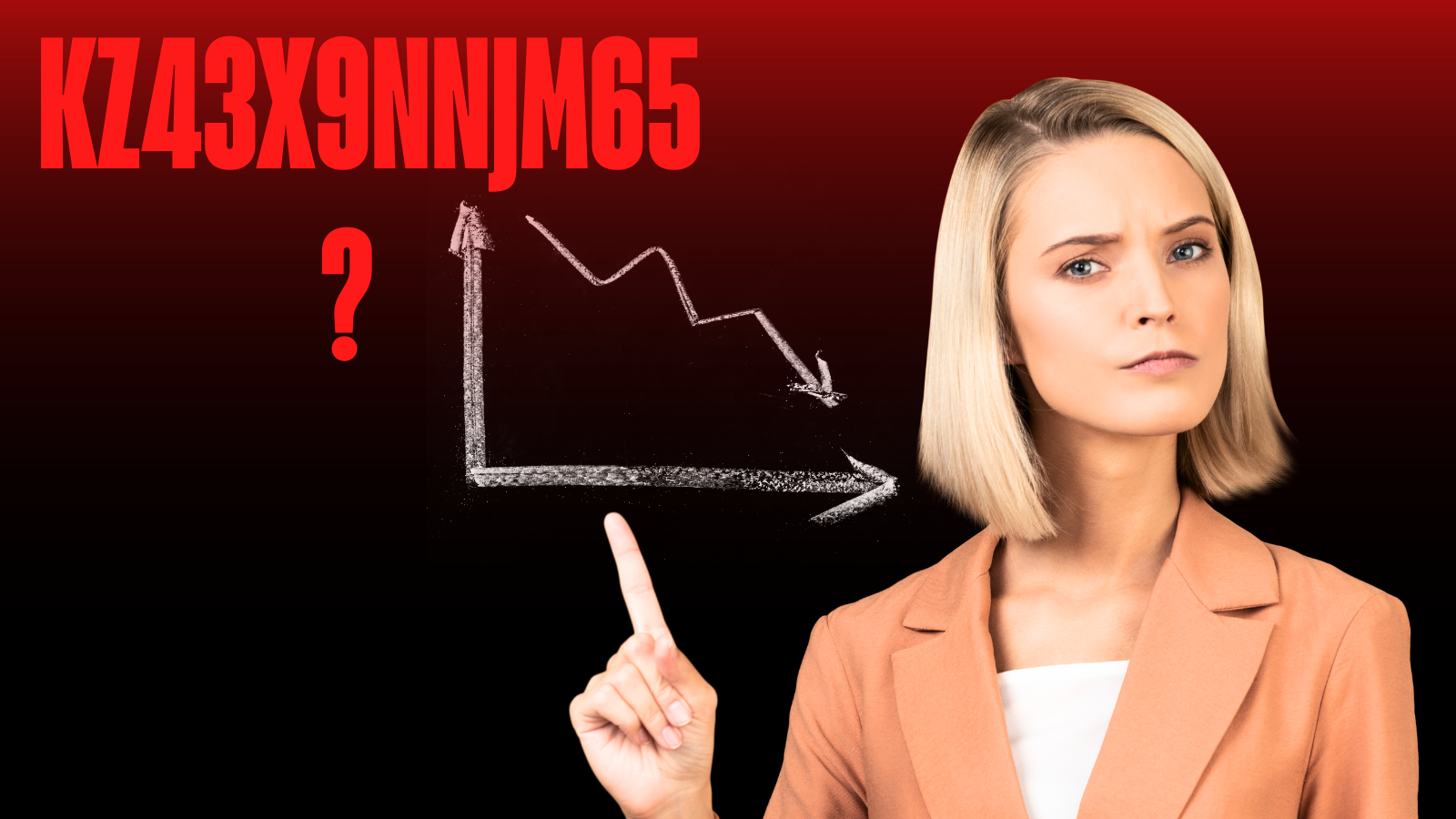
Coming across a string of characters like kz43x9nnjm65 is enough to make anyone pause. It looks like it came from a machine, it means nothing to the eye, and it raises an immediate question: should I be worried? This guide gives you a clear, honest answer — and the practical steps to handle any situation it appears in.
What Is kz43x9nnjm65?
kz43x9nnjm65 is an alphanumeric string — a sequence of letters and numbers — that functions as a machine-generated identifier. It is not a product name, a brand, a known technology, or a piece of malware. It is the kind of code that digital systems produce millions of times every day to label sessions, records, processes, and events in a way that is unique and unlikely to be duplicated.
To understand why such codes exist, consider how software manages information at scale. A web application handling millions of users simultaneously cannot rely on human-readable names to keep records separate. Instead, it generates random strings — identifiers — that act as fingerprints. Each one is unique by design, which prevents two records, sessions, or files from being confused with each other.
kz43x9nnjm65 fits this pattern precisely. It is 12 characters long, combines lowercase letters and digits, and has no obvious pattern — which is exactly what a well-generated identifier should look like. The strangeness you notice is not a warning sign. It is the code doing its job correctly.
| Quick Answer
kz43x9nnjm65 is almost certainly a machine-generated identifier — a code used by software to label a session, record, file, or event. By itself it is neither dangerous nor meaningful. What matters is the context in which you encountered it. |
Why Does kz43x9nnjm65 Look So Random?
The randomness is intentional. When a system needs to create a unique label — for a user session, a database entry, a support ticket, or a background task — it cannot rely on sequential numbers or human-written names without risking duplicates or predictability.
Most identifier-generation methods work by combining one or more of the following: a random number generator seeded with system data, a hashed value derived from a timestamp or device signature, or a standardised format such as a UUID (Universally Unique Identifier). The resulting string has no meaning to a human reader, but it has a specific and important meaning to the software that created it — it points to exactly one thing, and nothing else.
This is also why kz43x9nnjm65 draws attention when it becomes visible. Most users never see the layer of infrastructure that keeps digital systems organised. When an identifier surfaces in a URL, an email, or a page, it looks foreign because it belongs to the machine layer, not the user-facing layer. Seeing it is unusual, but it is not a signal that something has gone wrong.
Is kz43x9nnjm65 Safe? A Clear and Honest Answer
The code itself is neutral. A string of characters carries no payload, executes no code, and cannot access your data simply by appearing on a screen. Whether your situation is safe depends entirely on the context surrounding the code — not the code itself.
The following warning signs shift an encounter from routine to concerning. If any of these apply to your situation, treat it with care:
- The code appeared inside a message urging you to act urgently.
- The message asked you to confirm a password, payment details, or account credentials.
- You were redirected to an unfamiliar page without deliberately navigating there.
- A pop-up or alert claimed your device was infected or your account suspended.
- The sender’s email address was slightly misspelled or did not match the company it claimed to be from.
- A download started automatically or was strongly prompted.
- The message threatened legal action, account termination, or financial consequences.
If none of those apply — if the code simply appeared in a URL, a confirmation email, a support page, or an app screen without any demands attached — then you are almost certainly looking at a routine identifier that happened to become visible. No action is required.
Safe vs. Suspicious: How to Tell the Difference
The table below is your first filter. Find the column that best describes your experience and use it to decide your next step.
| Signal | Likely Harmless | Potentially Suspicious |
| Where it appeared | Browser address bar, app page, support email | Unexpected pop-up, text message, unknown email |
| What came with it | Normal content, no demands | Urgent warning, login prompt, download request |
| What it asked | Nothing at all | Click a link, enter credentials, call a number |
| The source | A service you already use | Unknown sender or unfamiliar domain |
| Page behaviour | Loaded normally | Redirected, reloaded, or blocked back button |
| Tone of message | Neutral and informational | Urgent, threatening, or alarming |
| Sender address | Matches official domain exactly | Slightly misspelled or free email service |
If the left column describes your situation, you can proceed without concern. If the right column matches what you experienced, work through the steps in the next section before doing anything else.
Where You Might See a Code Like kz43x9nnjm65
The same type of string can appear in many different places, and the location changes its meaning significantly. Here are the most common contexts:
In a Browser URL
This is the most common location. Websites routinely pass identifiers through the address bar to manage sessions, track referrals, run A/B tests, and handle authentication. Seeing kz43x9nnjm65 after a question mark or an ampersand in a URL you navigated to yourself is entirely normal and requires no action.
In an Email or Text Message
Legitimate companies do use reference codes in their communications — confirmation numbers, support ticket IDs, tracking references. The difference between a legitimate use and a phishing attempt is what surrounds the code. A genuine company will include the code as a reference without asking you to click urgently, log in via the email, or call a number. Any pressure alongside a code is the red flag, not the code itself.
In Browser History or a Copied Link
If you copied a link at some point and later noticed a long string in it, this is nearly always innocent. Full URLs from services you use regularly often contain session parameters and tracking codes that are invisible during normal browsing but become visible when you look at the raw link.
In App Logs or Error Messages
Developers and technical users encountering this string in application logs or error output are almost certainly seeing an internal reference. These are generated by the application itself and have no security implications.
In Search Results and Articles
Sometimes a code gains search volume simply because several people noticed it in different contexts and searched for it. Content sites respond by writing articles about it. The code may have no single specific meaning — but the search intent is real, and useful information about how these codes work is genuinely helpful to the people looking.
Types of Digital Identifiers: What They Are and Why They Exist
Understanding the landscape of legitimate identifiers helps build the instinct to distinguish routine codes from genuinely suspicious ones. The table below covers the main types you are likely to encounter.
| Type | Where Seen | Purpose | Risk Level |
| Session token | Browser URL or cookie | Keeps you logged in | No — standard |
| UUID / GUID | URLs, API responses, logs | Unique record ID | No — routine |
| Tracking param | Clicked links, email URLs | Marketing analytics | No — data only |
| Database record ID | Order or support emails | Links to your account record | No — normal |
| Redirect code | Unsolicited message or pop-up | Varies — investigate context | Check carefully |
Session Tokens
When you log into a website, a session token is created and stored in your browser. This token — typically a long random string — is sent back to the server with every page request, allowing the site to recognise you without requiring your password on every click. These tokens are deliberately random so they cannot be guessed by a third party.
UUIDs and GUIDs
A UUID (Universally Unique Identifier) or GUID (Globally Unique Identifier) is a standardised 128-bit number used to identify information in computer systems. They are generated by a defined algorithm and are statistically guaranteed to be unique across all systems that generate them. Database records, API resources, and file references all commonly use UUIDs.
Tracking and Analytics Parameters
When you click a link in a newsletter or a social media post, the URL often contains parameters that tell the destination website how you arrived. These typically appear as utm_source, utm_campaign, or ref= followed by a code. The code routes back to the sender’s analytics platform and informs them which campaign or link generated the visit. It does not collect personal data from your device.
Database Record IDs
When a company’s internal system creates a record — a support ticket, a purchase order, a document — it assigns that record a unique ID. This ID sometimes appears in confirmation emails or support page URLs so the system can quickly retrieve the correct record. Seeing such a code in a legitimate transactional email from a service you use is completely standard.
How Scammers Use Innocent-Looking Codes
Knowing how legitimate identifiers work also means understanding how they are misused. Fraudulent messages frequently include technical-looking codes not because the code does anything, but because it creates an appearance of system-generated authenticity. A random string in a message makes the communication look like it came from a real software platform.
This technique is documented by cybersecurity organisations as a social engineering tactic — specifically, false authority. According to the Cybersecurity and Infrastructure Security Agency (CISA), phishing emails that include reference numbers, account codes, or technical identifiers consistently show higher success rates than those without, because users associate technical-looking content with legitimate institutional communication.
The tell is always the behaviour around the code, never the code itself. Real systems do not pressure users. Real services do not demand immediate action under threat of account suspension. Real companies do not ask for passwords through email links. When a message includes a code alongside any of those patterns, the code is being used as a prop — and the right response is to stop, not to comply.
| Key Principle
A legitimate organisation will never send you a code and simultaneously demand urgent action, a password, payment details, or a download. Urgency combined with a technical-looking identifier is the signature of a phishing attempt, not a real system alert. |
Step-by-Step: What to Do If You See kz43x9nnjm65
If you have come across this code and are not sure how to respond, work through these steps in order. Do not skip ahead.
- Stop before interacting. Do not click any links, reply to messages, call any numbers, or download anything connected to where the code appeared. Pause completely first.
- Note exactly where you saw it. Was it in a URL you navigated to yourself? An email? A pop-up? A text message? The location shapes everything about how you should respond.
- Read the surrounding content carefully. Is there urgency? A demand? Does the tone, design, or sender address feel slightly wrong? Trust that instinct.
- Verify independently if a company is mentioned. Open a new browser tab and go directly to that company’s official website. Do not use any link from the message. Check your account there directly.
- Check your browser if anything unusual happened. Look at your extensions for anything unfamiliar, check notification permissions, and review your recent downloads folder.
- Run a security scan if you remain concerned. Use your device’s built-in tool (Windows Defender on Windows, or a trusted application on Mac). Do not download security software from a pop-up or unfamiliar page.
What to Do If You Already Clicked or Shared Information
This is the part many guides skip — what to do when you are reading after the fact, having already taken an action you are now uncertain about. Speed matters here. Most account takeover attempts and fraudulent transactions occur within the first few hours.
If You Clicked a Link
- Close the page if it is still open.
- Clear your browser history and cookies.
- Check for any extensions added without your knowledge.
- Change the password for any account associated with that service, using the official site directly.
If You Entered Login Credentials
- Change your password immediately on the official site.
- Enable two-factor authentication if it is not already active.
- Review your recent login history for unfamiliar sessions.
- If the account holds financial information, review recent transactions.
If You Entered Payment or Financial Information
- Contact your bank or card issuer immediately and explain what happened.
- Request a card freeze or replacement number as needed.
- Review your account for any unauthorised transactions in the last 24 to 48 hours.
Report the incident at reportfraud.ftc.gov — the official fraud reporting portal of the US Federal Trade Commission.
If You Downloaded a File
- Do not open it if you have not already done so.
- Delete it from your downloads folder.
- Run your antivirus or security software immediately.
- If you already opened it and your device is behaving strangely, disconnect from the internet and consult a professional before doing anything else.
Why kz43x9nnjm65 Became a Searchable Term
It is worth understanding how a random-looking code becomes a search topic, because that dynamic itself says something useful about how the internet works.
When a code like kz43x9nnjm65 appears in enough different contexts — URLs, shared links, forwarded messages — a small number of people search it out of curiosity or concern. That initial search volume signals to content platforms that the term has audience interest. Articles get written. Those articles rank in search results. More people see the term, and the cycle continues.
This does not mean the code has special significance. It means that the combination of visibility and unfamiliarity is enough to generate genuine curiosity, and that curiosity is worth addressing honestly. A code can produce substantial online discussion while remaining a simple, unremarkable identifier with no particular meaning outside its original system.
Recognising this pattern is itself a useful digital literacy skill. The volume of content surrounding a term is not a reliable indicator of that term’s importance. It is an indicator of how many people were curious enough to search for it.
Staying Safe Online: Building Better Digital Habits
Understanding how identifiers like kz43x9nnjm65 work is one part of a broader set of skills that keep you safer online. For a comprehensive look at account security, password management, and recognising phishing attempts, read our guide on protecting your accounts and devices online.
The habits that matter most are simple and consistent: verify before you click, navigate independently rather than following links in messages, keep your passwords unique across services, and enable two-factor authentication wherever it is offered. None of these take more than a few minutes to set up, and together they reduce your exposure to the vast majority of online threats significantly.
Frequently Asked Questions
What is kz43x9nnjm65 in simple terms?
It is a machine-generated alphanumeric identifier — the type of random string that digital systems create to label sessions, records, files, and events. It has no meaning to a human reader and is not associated with any specific product or known technology.
Is kz43x9nnjm65 a virus or malware?
No. A string of characters is not a virus. Viruses are executable programs that must be downloaded and run on a device. A code appearing in a URL, email, or page does not by itself constitute any infection or threat.
Why does it look so random?
Because it was generated by software, not written by a person. Machine-generated identifiers are intentionally random so they are unique and difficult to predict or duplicate. That randomness is a design requirement, not a warning sign.
Should I click a link that contains this code?
Not automatically. First check whether the link came from a trusted source you were already using. If it arrived unexpectedly in an email, text, or pop-up — especially alongside urgent language — navigate to the relevant service yourself in a new browser tab rather than clicking the link.
What if I already clicked something containing this code?
Work through the recovery steps in the relevant section above. The most important actions are: change affected passwords on official sites, review your account activity for unfamiliar entries, check your browser for unwanted extensions, and contact your bank immediately if any financial information was shared.
Does seeing this code mean I have been hacked?
Not on its own. The code appearing somewhere is not evidence of a compromise. What would indicate a problem is if the appearance of the code was accompanied by demands, redirects, unusual device behaviour, or a prompt to enter credentials or download something.
Why are there so many articles about this code?
Because enough people encountered it in various contexts and searched for it. That search volume prompted content sites to write explanatory articles. The code itself may be entirely routine — the articles exist because curiosity about unfamiliar strings is common and the questions they prompt are genuine.
Theo Louse
I am Theo Louse. My skills are dedicated to the field of technology information and try to make daily lives more enjoyable. With more than 12 years of experience with BM, we are particularly famous for 100% self-developed ideas. Over these years, we have worked to make everyday life more convenient for the fast-paced world we live in.